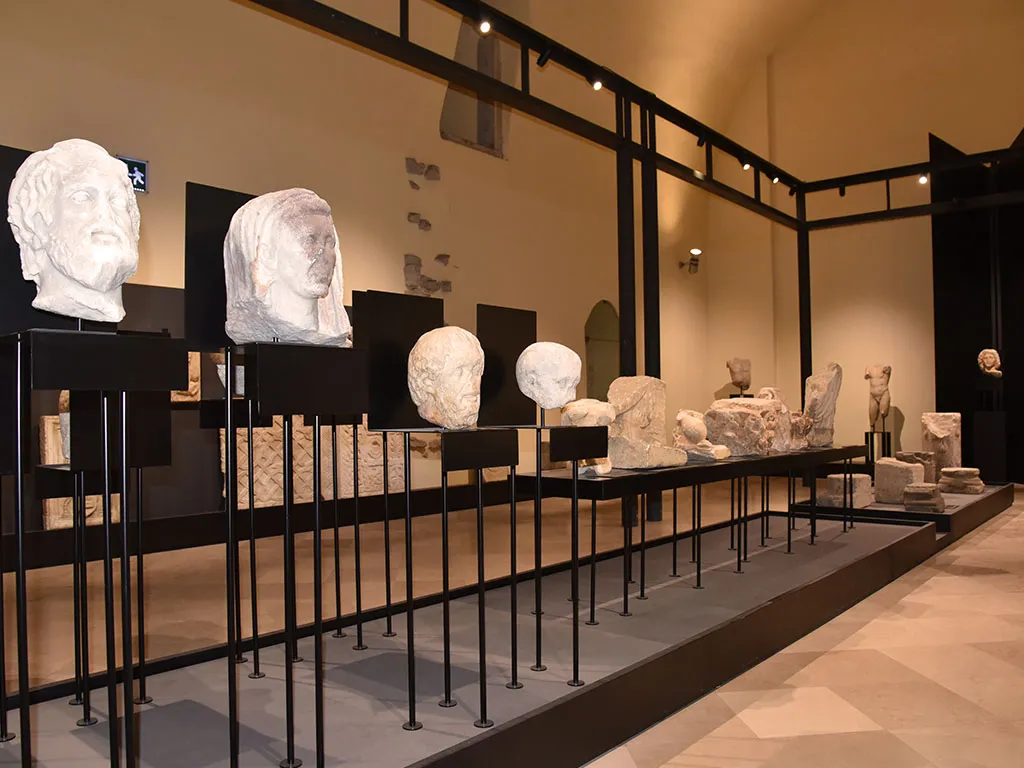
La terza sala presenta i principali contesti archeologici rinvenuti nel territorio di Fondi e nella sua pianura. Il percorso espositivo segue un ordine cronologico, dalle testimonianze più antiche della presenza umana, riconducibili a gruppi di Homo neanderthalensis, fino alle fasi più tarde della storia del territorio, che arrivano al Medioevo.
Gran parte dei reperti proviene da contesti abitativi di epoca romana, in particolare da domus, abitazioni private appartenenti alle famiglie più agiate. Gli oggetti esposti — tra cui elementi architettonici, arredi, colonne, vasi e anfore — permettono di ricostruire aspetti della vita domestica e dell’organizzazione degli spazi abitativi.
Attraverso questi materiali, la sala racconta l’evoluzione dell’insediamento umano nel territorio fondano e restituisce uno sguardo sulla vita quotidiana delle comunità che hanno abitato quest’area nel corso dei secoli.
Chianchiarelle
Sulle sponde del lago di Fondi, in località Chiancarelle, compaiono le più antiche tracce umane della piana: livelli dell’Aurignaziano (Paleolitico superiore, ca. 40.000–35.000 anni fa) con focolari e strati di combustione, ossa bruciate di cervo e cavallo che attestano caccia, macellazione e consumo sul posto. L’ambiente lacustre offriva acqua, selvaggina e selce facilmente reperibile, favorendo brevi accampamenti.
L’industria litica documenta l’intera catena operativa, dai nuclei preparati ai prodotti laminari e agli scarti: alcuni strumenti sono ritoccati in raschiatoi per pelli e in punte per armi da getto, mentre schegge di risulta e percussori in ciottolo completano il corredo. Il fuoco, centro delle attività, serviva per cottura, lavorazione delle carcasse e illuminazione. Chiancarelle inserisce la piana di Fondi nella prima grande stagione del Paleolitico superiore; rinvenimenti sporadici paleolitici e neolitici in altri settori confermano una lunga continuità d’uso del territorio.
Pianara
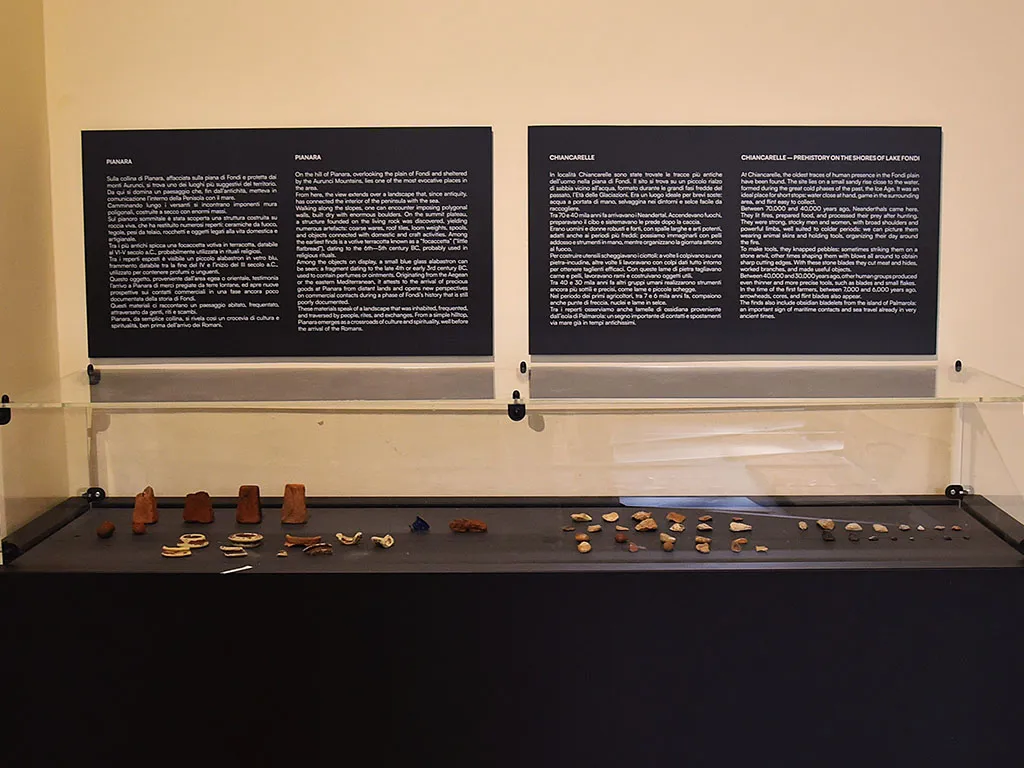
Sulla collina di Pianara, affacciata sulla piana di Fondi e protetta dai monti Aurunci, si trova uno dei luoghi più suggestivi del territorio. Da qui si domina un paesaggio che, fin dall’antichità, metteva in comunicazione l’interno della Penisola con il mare. Camminando lungo i versanti si incontrano imponenti mura poligonali, costruite a secco con enormi massi.
Sul pianoro sommitale è stata scoperta una struttura costruita su roccia viva, che ha restituito numerosi reperti: ceramiche da fuoco, tegole, pesi da telaio, rocchetti e oggetti legati alla vita domestica e artigianale. Tra i più antichi spicca una focaccetta votiva in terracotta, databile al VI–V secolo a.C., probabilmente utilizzata in rituali religiosi.
Tra i reperti esposti è visibile un piccolo alabastron in vetro blu, frammento databile tra la fine del IV e l’inizio del III secolo a.C., utilizzato per contenere profumi o unguenti. Questo oggetto, proveniente dall’area egea o orientale, testimonia l’arrivo a Pianara di merci pregiate da terre lontane e apre nuove prospettive sui contatti commerciali in una fase ancora poco documentata della storia di Fondi. Pianara, da semplice collina, si rivela così un crocevia di cultura e spiritualità, ben prima dell’arrivo dei Romani.
Anfore per drenare la pianura
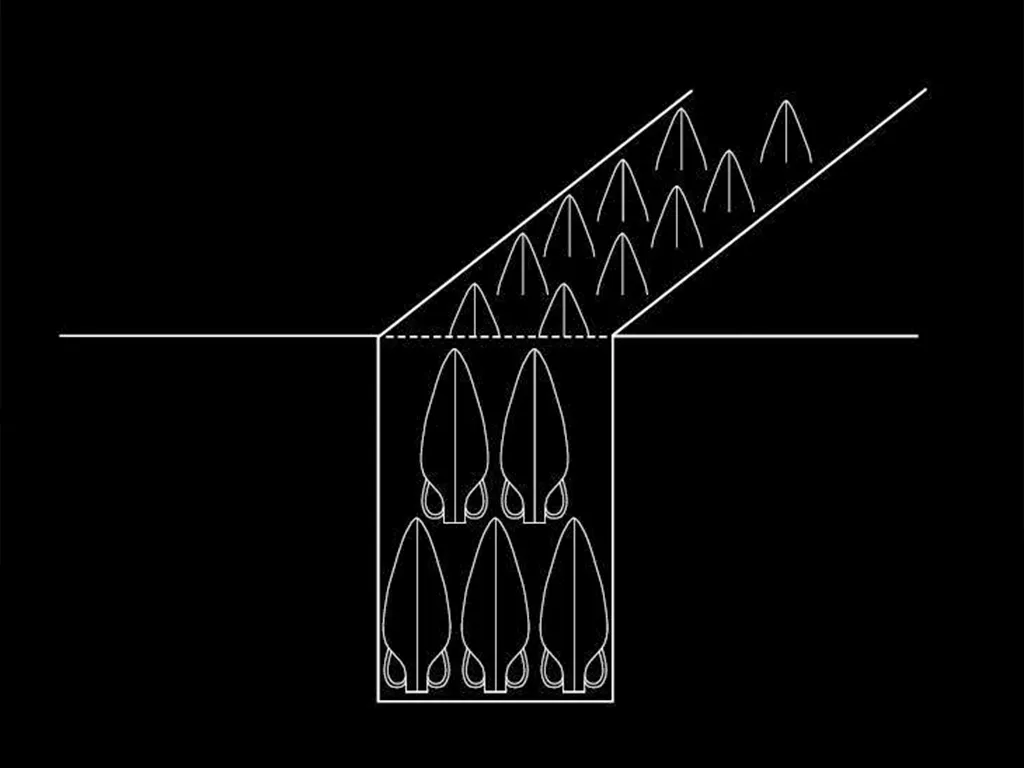
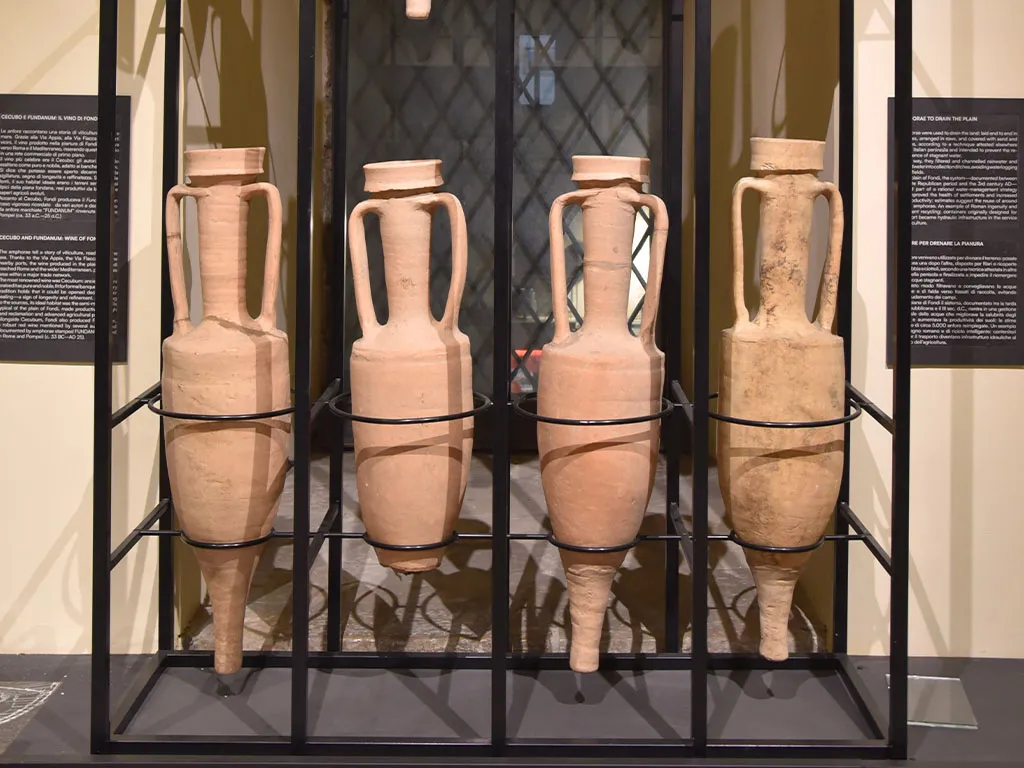
Le anfore venivano utilizzate anche per drenare il terreno: posate in trincea una dopo l’altra, disposte per filari e ricoperte con sabbia e ciottoli, secondo una tecnica attestata in altre aree della penisola e finalizzata a impedire il riemergere delle acque stagnanti. In questo modo filtravano e convogliavano le acque piovane e di falda verso fossati di raccolta, evitando l’impaludamento dei campi.
Nella piana di Fondi il sistema, documentato tra la tarda età repubblicana e il III sec. d.C., rientra in una gestione razionale delle acque che migliorava la salubrità degli abitati e aumentava la produttività dei suoli: le stime parlano di circa 5.000 anfore reimpiegate. Un esempio di ingegno romano e di riciclo intelligente: contenitori nati per il trasporto diventano infrastrutture idrauliche al servizio dell’agricoltura.
Cecubo e Fundanum: il vino di Fondi
Le anfore raccontano una storia di viticultura, strade e mare. Grazie alla Via Appia, alla Via Flacca e ai porti vicini, il vino prodotto nella pianura di Fondi viaggiava verso Roma e il Mediterraneo, inserendo questo territorio in una rete commerciale di primo piano.
Il vino più celebre era il Cecubo: gli autori antichi lo esaltano come puro e nobile, adatto ai banchetti solenni. Si dice che potesse essere aperto decenni dopo la sigillatura, segno di longevità e raffinatezza. Secondo le fonti, il suo habitat ideale erano i terreni semipaludosi tipici della piana fondana, resi produttivi da bonifiche e saperi agricoli evoluti.
Accanto al Cecubo, Fondi produceva il Fundanum, un rosso vigoroso ricordato da vari autori e documentato da anfore marchiate “FUNDANUM” rinvenute a Roma e Pompei (ca. 33 a.C.–25 d.C.).
Villa in località Vallaneto
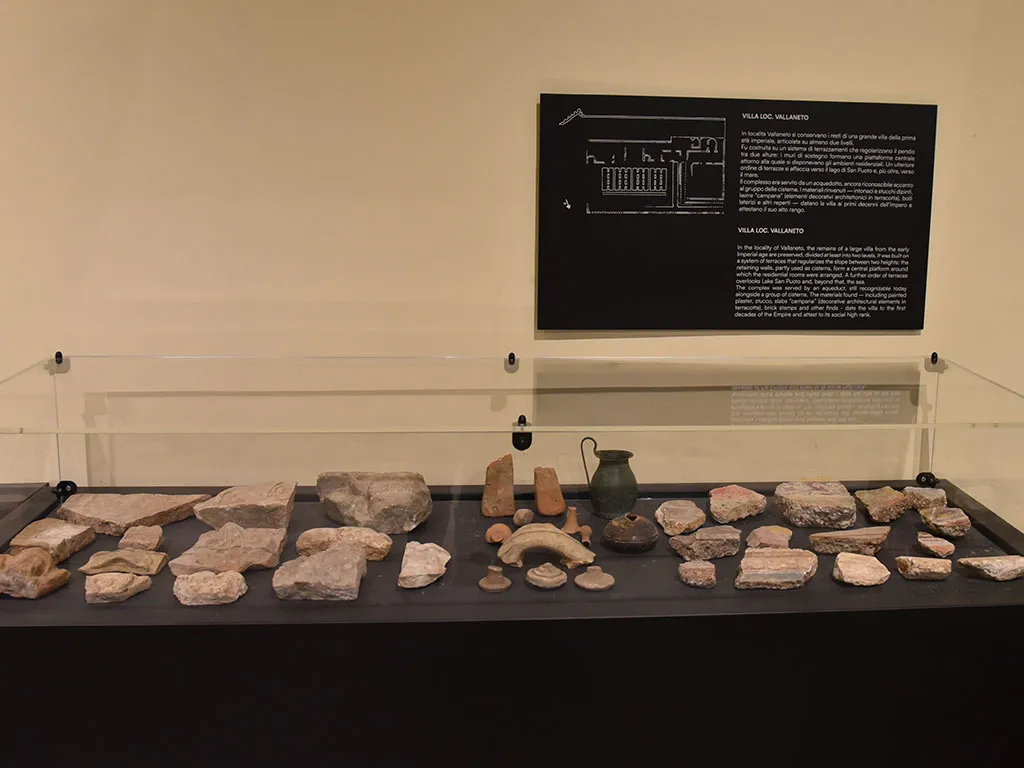
In località Vallaneto si conservano i resti di una grande villa della prima età imperiale, articolata su almeno due livelli. Fu costruita su un sistema di terrazzamenti che regolarizzano il pendio tra due alture formando una piattaforma centrale attorno alla quale si disponevano gli ambienti residenziali. Un ulteriore ordine di terrazze si affaccia verso il lago di San Puoto e, più oltre, verso il mare.
Il complesso era servito da un acquedotto, ancora riconoscibile accanto al gruppo delle cisterne. I materiali rinvenuti — intonaci e stucchi dipinti, lastre “campana” frammentarie, bolli laterizi e altri reperti — datano la villa ai primi decenni dell’Impero e attestano il suo alto rango.
Fonte di Vitruvio: acqua, fede e vita nell’antica Fondi
Alle pendici dei Monti Passignano e Cucuruzzo, a nord-ovest di Fondi, sgorgavano un tempo numerose sorgenti. La più importante era la Fonte di Petrulo: azionava mulini, irrigava campi e sosteneva la vita della città. Situata fuori dalle mura dell’antica Fundi, è nota anche come “Fonte di Vitruvio”, in memoria di un eroe locale che, secondo la tradizione, guidò una rivolta contro Roma nel IV sec. a.C.
Fino al Novecento erano visibili resti monumentali, interpretati prima come villa, poi come impianto termale; oggi si ritengono parte di un sistema idrico collegato all’acquedotto romano.
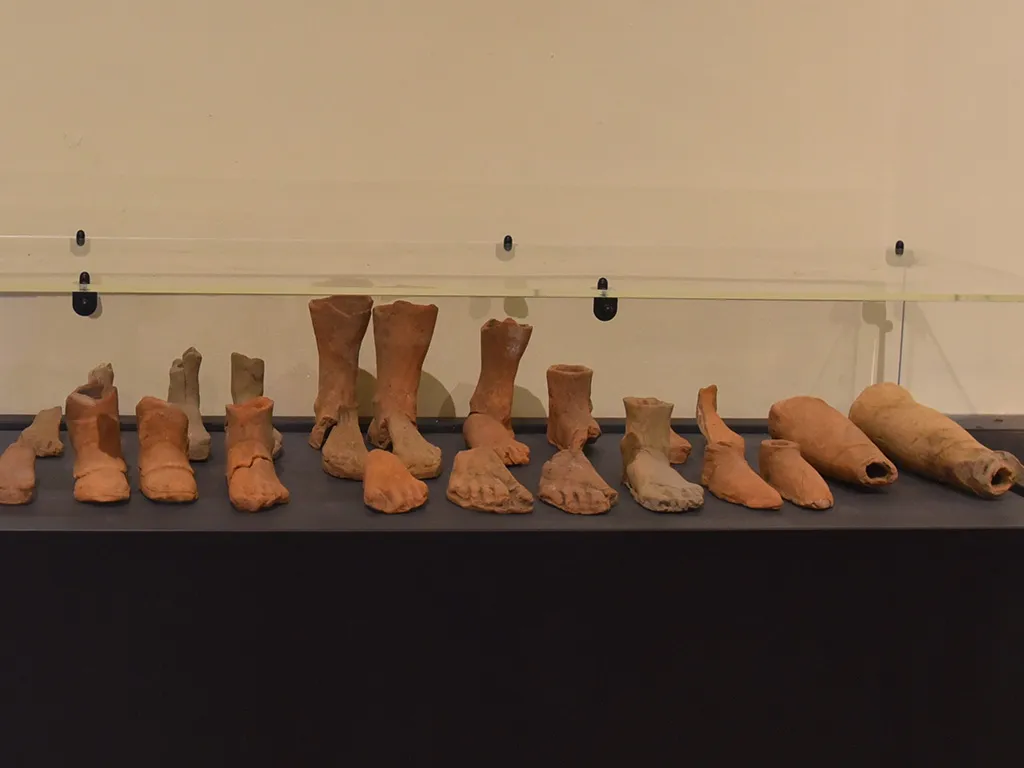
Nel 1952, accanto alla fonte, fu scoperto un deposito votivo con oltre 150 oggetti in terracotta (III–II sec. a.C.): mani, piedi, volti e altre parti del corpo offerti come ex voto alle divinità dell’acqua e della salute. Santuari di questo tipo erano comuni nell’Italia centro-meridionale: luoghi in cui spiritualità, natura e quotidianità si incontravano.
Casale Mosillo
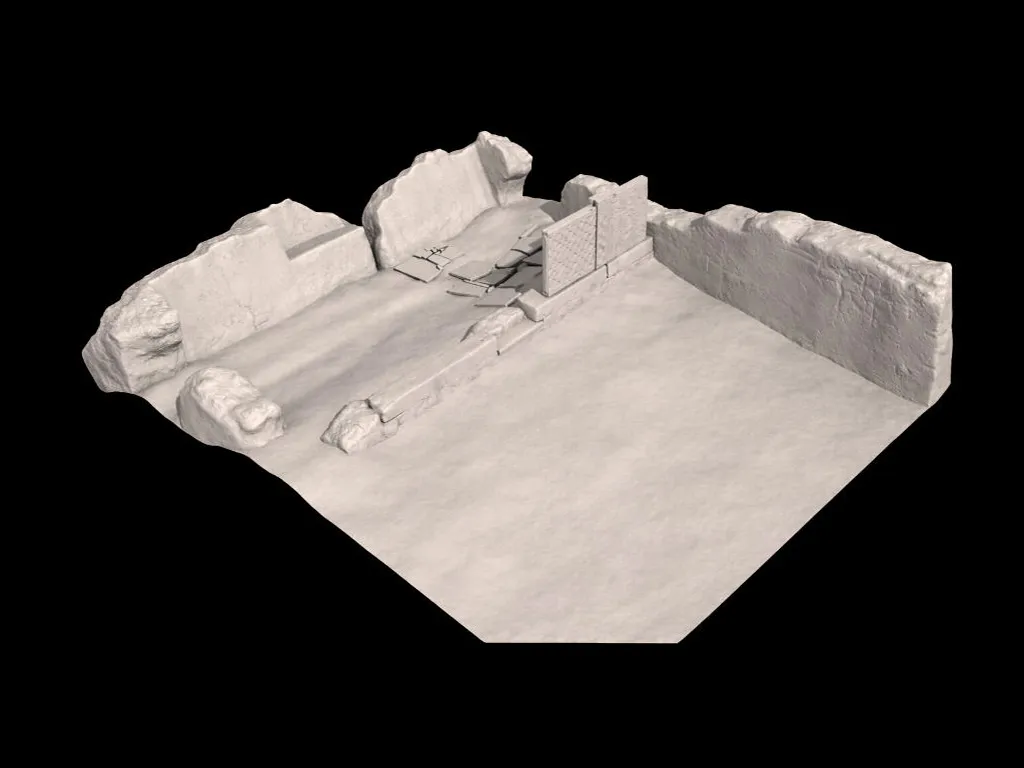
Casale Mosillo è un piccolo insediamento rurale posto su una bassa altura tra l’abbazia di San Magno e il lago di Fondi. I resti visibili appartengono a una chiesa di età altomedievale, costruita probabilmente nel IX secolo d.C., in un paesaggio di campi coltivati e sorgenti.
L’edificio aveva una navata unica con abside semicircolare e presbiterio rialzato, pavimentato con lastre marmoree di reimpiego. All’interno si conservano il gradino che separava l’aula dal presbiterio e frammenti di plutei e transenne scolpite, anch’essi databili al IX secolo d.C.
Nelle murature compaiono blocchi e iscrizioni di età romana (I–IV secolo d.C.) reimpiegati, che ricordano la presenza di un precedente insediamento rurale. Intorno alla chiesa, resti di ambienti di servizio e di una piccola struttura fortificata mostrano la vita di una comunità agricola attiva tra altomedioevo ed età bassomedievale, prima dell’abbandono del sito entro il XIV secolo.
Reperti in esposizione
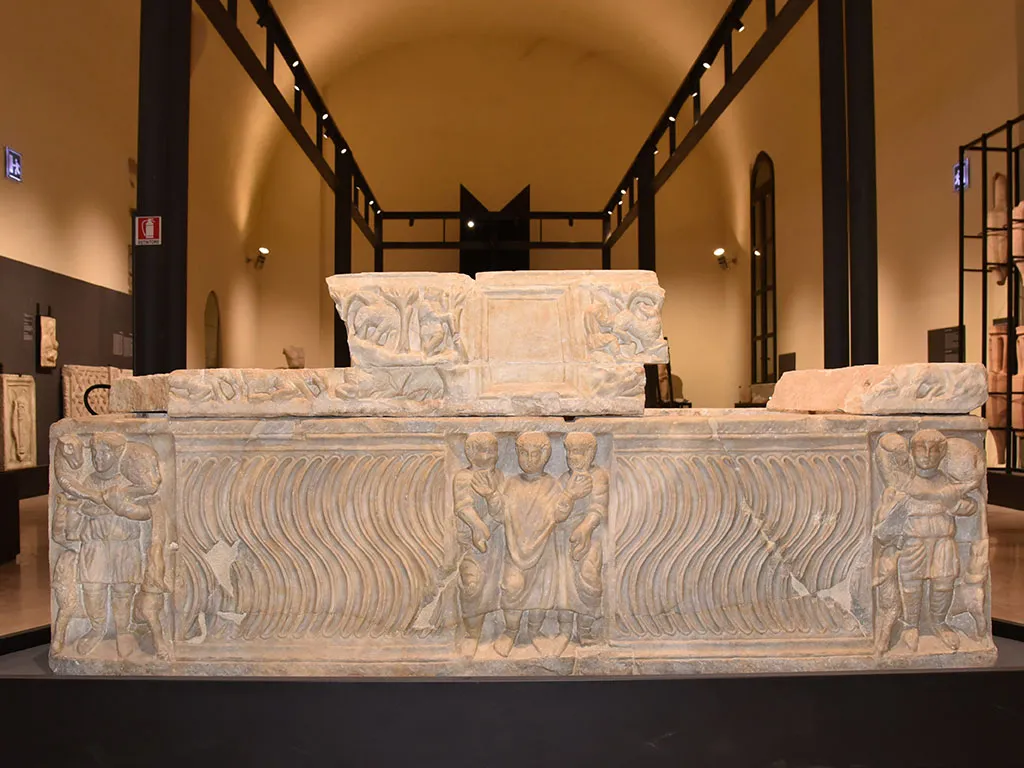
Arte e fede dei primi cristiani: il sarcofago di Fondi
Prima età cristiana — Pietra calcarea
Il sarcofago paleocristiano presenta una cassa rettangolare con strigilature (canali ondulati) sul fronte e un rilievo figurato: ai lati il Buon Pastore; al centro un’orante (figura in preghiera) affiancata da due personaggi interpretati come santi o apostoli. Il velum (tenda) che incornicia la scena centrale allude al passaggio all’aldilà e ai drappi dei riti funebri.
Sul coperchio compaiono scene pastorali attorno a uno spazio destinato al nome del defunto. La decorazione limitata alla sola fronte suggerisce una collocazione addossata a una parete o in nicchia. Il reperto testimonia la diffusione del cristianesimo e la qualità dell’arte funeraria delle prime comunità di Fondi.
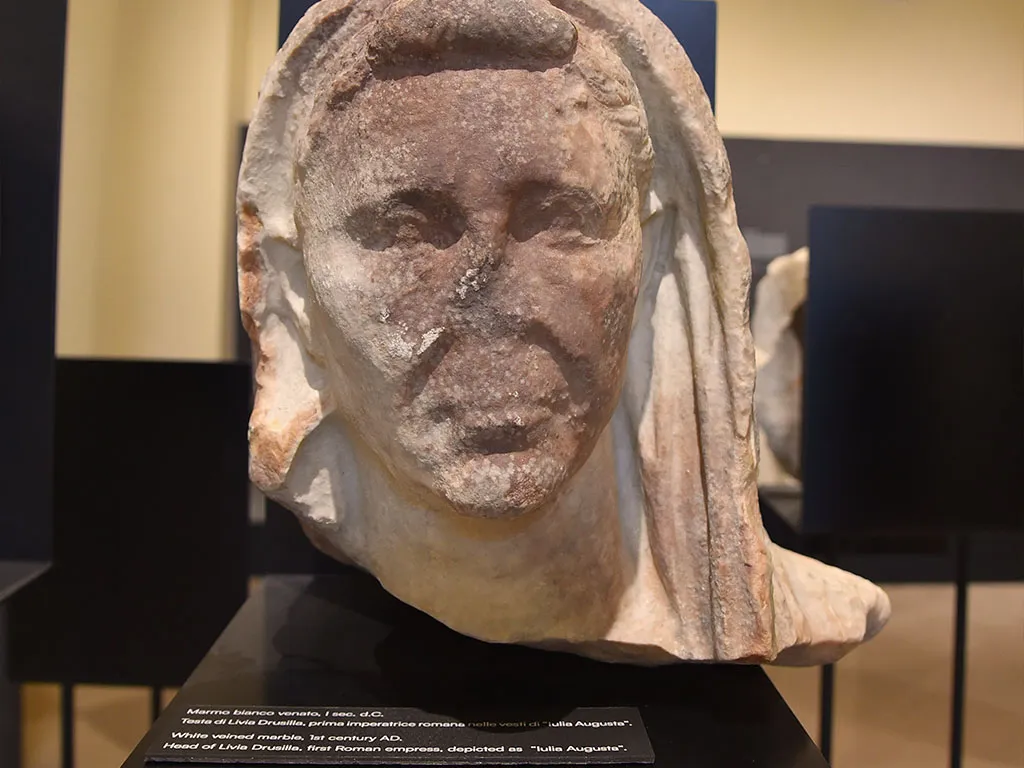
Il volto di Livia Drusilla: la madre dell’Impero
Età giulio-claudia — Marmo
La testa è identificata come Livia Drusilla, terza moglie di Augusto e madre di Tiberio e di Druso Maggiore. Il riconoscimento si basa su tratti iconografici e fisiognomici: volto realistico e maturo, zigomi pronunciati, bocca piccola, occhi grandi e l’acconciatura “all’Ottavia” (ricciolo frontale raccolto in treccia e chignon occipitale), tipica delle donne della famiglia imperiale. Il mantello sul capo (capite velato) la presenta come Iulia Augusta, in veste sacerdotale dopo il 14 d.C.
L’attribuzione è sostenuta dal confronto con un ritratto analogo conservato a Barcellona e dal contesto locale ricco di testimonianze di età giulio-claudia. Livia Drusilla, appartenente alla gens Claudia, trascorse secondo la tradizione storiografica l’infanzia tra Roma e Fondi, dove i Claudii possedevano ampie proprietà. Un volto che unisce storia dinastica, culto pubblico e memoria della città.
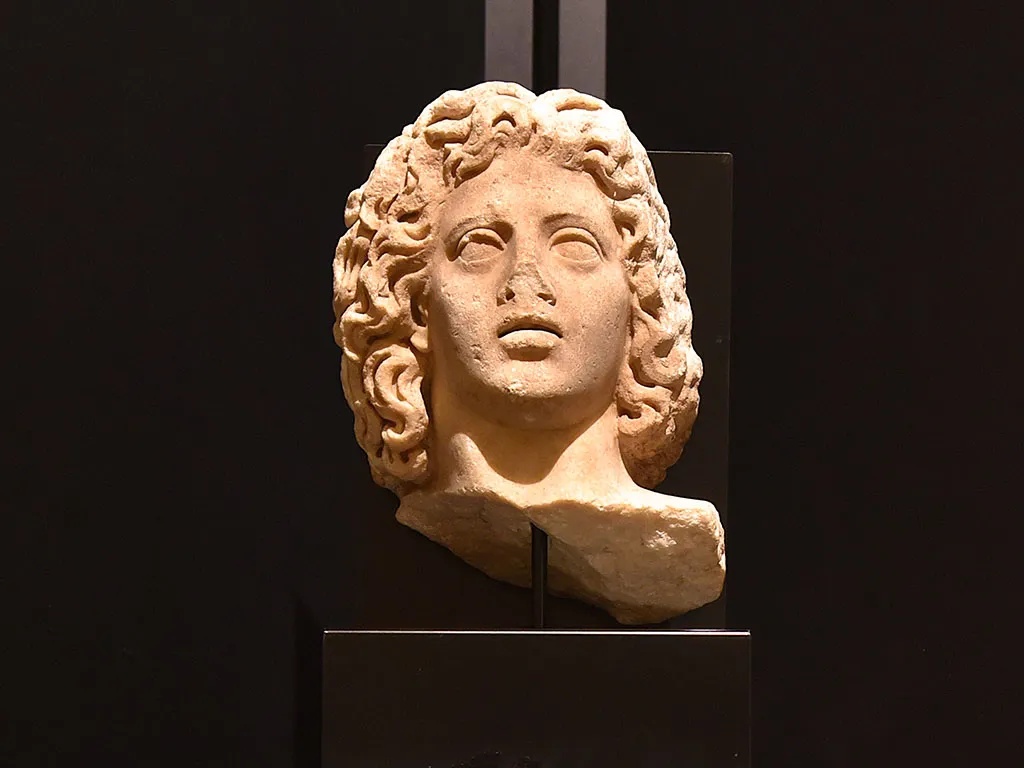
Elios: il volto che viaggiò nel tempo
Età romana, influenza ellenistica — Marmo — Rinvenuta a Fondi nel 1936
La testa marmorea di Alessandro Magno, raffigurato come dio del Sole Elios, fu scoperta casualmente nel 1936 nel centro di Fondi, durante i lavori per la fognatura. Presenta un volto idealizzato e chiome fluenti. Doveva appartenere a una statua onoraria in contesto pubblico, segno dell’influenza ellenistica e della qualità artistica raggiunta in età romana nel territorio fondano.
Rimasta nascosta tra il 1944 e gli anni Sessanta, riapparve nel 1964 al Museo archeologico dell’Università di Münster. Negli anni Duemila, a seguito di un accordo tra le autorità italiane e tedesche, è stata restituita al Museo di Fondi, dove oggi è esposta come uno dei pezzi più significativi della collezione.
La statua del “Vittimario”
Età romana — Marmo — Rinvenuta nel 1952, via dei Volsci
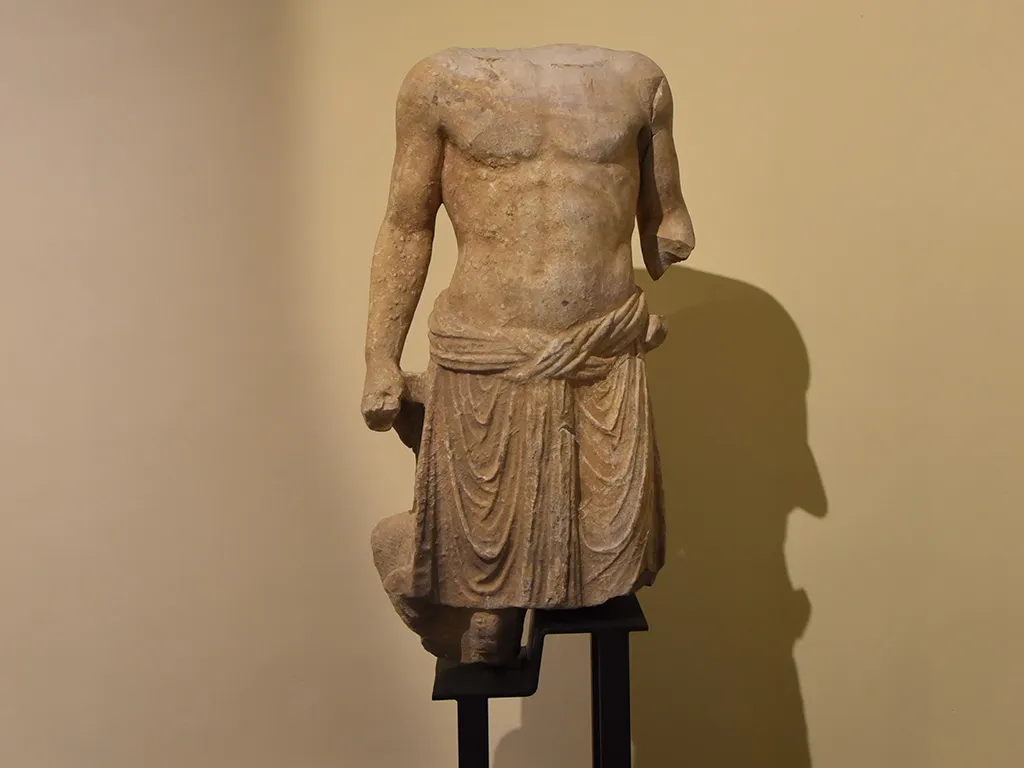
Nel 1952, durante i lavori di fondazione di una casa in quella che oggi è via dei Volsci, fu scoperta una grande statua romana, spezzata in più frammenti. La figura, priva già in antico di alcune parti, arrivò al primo Antiquarium cittadino e, dopo un furto avvenuto nel 1980 e il successivo recupero, è giunta al Museo Civico priva della testa e di una gamba.
La posizione dei rinvenimenti e la presenza di tratti di murature circostanti suggeriscono che la scultura fosse originariamente addossata a una parete, parte di un gruppo monumentale che rappresentava una scena di sacrificio. Oggi la statua è interpretata come un “Luperco”, uno dei sacerdoti che, in età romana, prendevano parte ai riti di purificazione e fertilità legati al culto dei Lupercalia: una festa religiosa celebrata in febbraio in onore di Fauno Luperco, con corse rituali dei sacerdoti (Luperci) per proteggere la città e favorire fecondità e prosperità.